Reviewed for medical accuracy | Orthopedic & preventive health content
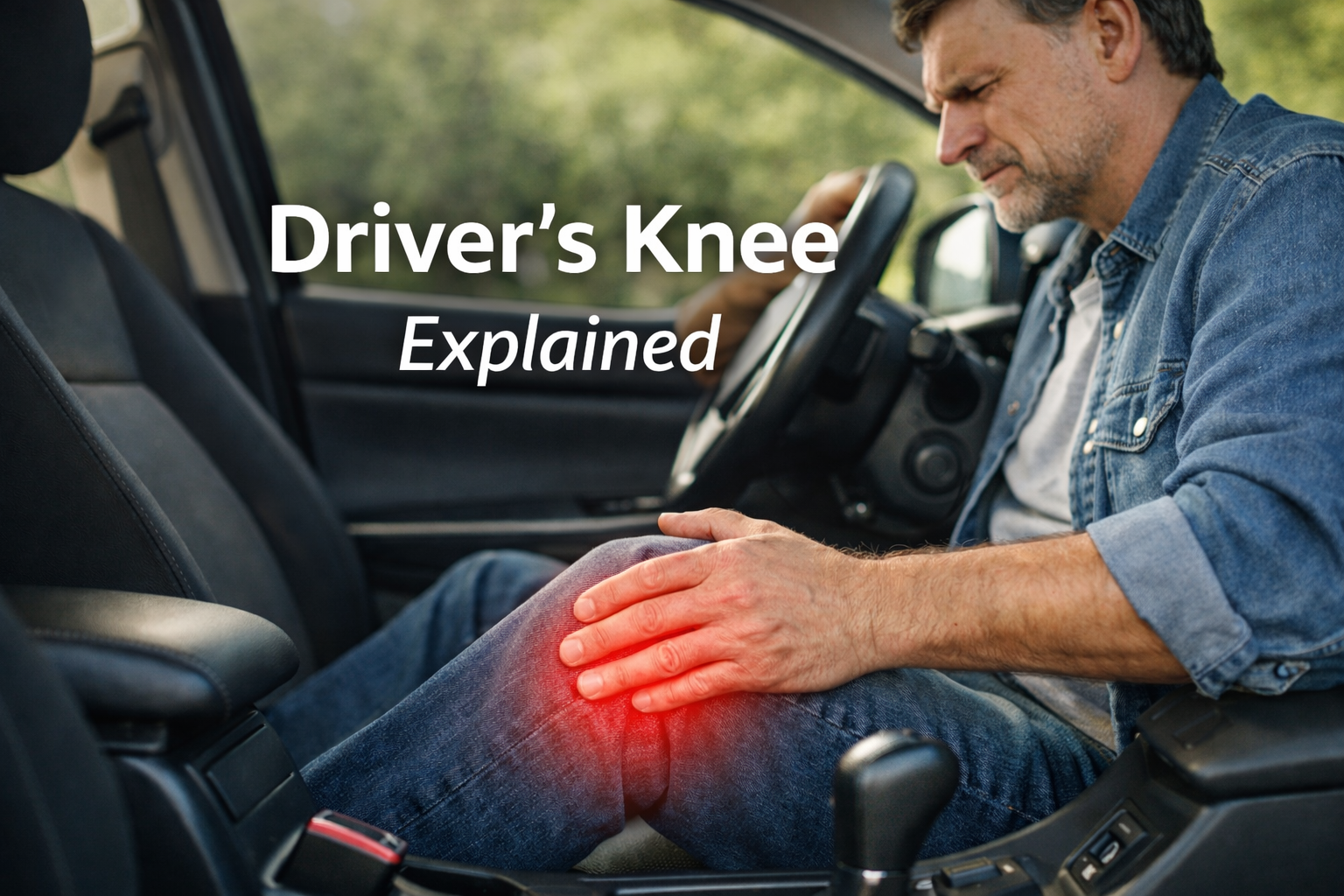
Knee pain does not always begin with an injury. In many people, it starts behind the steering wheel.
Orthopedic clinics are seeing a steady rise in knee problems linked to prolonged driving. One condition stands out for its slow and often unnoticed progression. That condition is patellar tendinopathy, commonly known as driver’s knee.
This article is written from a clinical and preventive medicine perspective.
It explains why drivers develop tendon damage and how early correction can prevent long-term knee problems. The focus is joint preservation, not short-term pain masking.
Why Drivers Are a High-Risk Group
Driving places the knee in a mechanically stressed position. Risk increases with time spent sitting.
When the knee remains flexed for long periods:
- Blood flow to the tendon decreases
- Tissue recovery slows
- Repetitive micro-stress accumulates
Manual driving adds repetitive loading through the clutch and brake. Traffic conditions further increase tendon fatigue.
The main issue is not distance traveled. It is static posture combined with repeated knee use. Early correction can significantly reduce this risk.
What Happens Inside the Patellar Tendon
Patellar tendinopathy is not simple inflammation. It is a degenerative tendon condition.
Within the tendon:
- Collagen fibers lose proper alignment
- Elastic properties decline
- Healing response weakens
Structural damage develops before pain appears. Symptoms often feel sudden. Degeneration usually begins much earlier.
This explains why rest alone often fails.
How the Condition Progresses Over Time
Symptoms develop gradually. Early warning signs are often ignored.
Stage One: Early Tendon Stress
- Mild discomfort after driving
- Stiffness when standing up
Stage Two: Functional Limitation
- Pain while climbing stairs
- Reduced walking endurance
Stage Three: Chronic Tendon Degeneration
- Pain even at rest
- Weak knee extension
- Avoidance of activity
Recovery becomes slower as degeneration advances.
Who Is Most at Risk for Driver’s Knee?
Patellar tendinopathy does not affect all drivers equally. Certain groups develop symptoms earlier.
Higher risk is seen in:
- People driving more than two hours daily
- Commercial, delivery, or ride-share drivers
- Drivers in frequent stop-and-go traffic
- Individuals with weak thigh or hip muscles
- People with previous knee injury
Risk increases with excess body weight. Low physical conditioning further contributes.
Recognizing risk early improves prevention.
How Doctors Clinically Evaluate Driver’s Knee
Diagnosis is primarily clinical. A detailed driving and activity history is essential.
Doctors assess:
- Pain location below the kneecap
- Symptom timing related to driving
- Pedal usage and sitting posture
Imaging supports diagnosis when needed. Ultrasound can show tendon thickening. MRI reveals fiber degeneration and severity.
Early diagnosis helps prevent permanent tendon damage.
Evidence-Based Treatment Approach
Effective treatment focuses on tendon healing, not only pain relief.
Load Reduction: Driving duration should be temporarily reduced. Activities stressing the knee must be limited.
Pain Control: Cold therapy helps reduce flare-ups. Medication may be used short term under medical advice.
Structured Physiotherapy: This is the cornerstone of treatment. Eccentric strengthening improves tendon quality. Exercises must progress gradually.
Mechanical Support: Patellar straps reduce tendon strain during activity. They support recovery but do not replace rehabilitation.
Advanced Management: Biologic therapies may help chronic cases. Surgery is reserved for patients unresponsive to conservative care.
Consistency determines outcome.
Driving Posture Mistakes That Increase Tendon Load
Small ergonomic mistakes can cause significant damage.
High-risk habits include:
- Sitting too far from the pedals
- Excessive knee flexion
- Low seat height
- Dominant use of one leg for braking
Correct posture reduces tendon stress immediately. It is one of the most effective preventive measures.
Prevention Strategies for Regular Drivers
Prevention works best before pain begins. Simple habits make a large difference.
Protective measures include:
- Adjusting the seat before every drive
- Taking breaks every forty-five minutes
- Maintaining leg muscle strength
- Wearing supportive footwear
Automatic vehicles reduce repetitive knee stress. They may benefit long-term drivers.
Common Misconceptions About Driver’s Knee
Several beliefs delay proper care.
- Knee pain is not always simple fatigue
- Rest alone rarely heals tendon degeneration
- The condition is not limited to athletes
- Younger drivers are not immune
Correct understanding improves recovery.
When Should a Driver Seek Medical Evaluation?
Medical assessment should not be delayed.
Consult a specialist if:
- Knee pain lasts longer than two weeks
- Pain worsens despite rest
- Swelling or weakness develops
- Daily activities become difficult
Early intervention shortens recovery time. Delayed care increases the risk of chronic damage.
Long-Term Outlook for Drivers
Early-stage patellar tendinopathy has an excellent prognosis. Advanced degeneration requires prolonged rehabilitation.
Tendons heal slowly. Patience and adherence are essential.
Drivers who correct posture and workload rarely relapse. Those who ignore these factors often do.
This article is intended for educational purposes only. It does not replace professional medical advice, diagnosis, or treatment.
Knee pain can have multiple causes. Consult a qualified orthopedic specialist or physiotherapist for personalized evaluation and care. Do not delay medical consultation based on online information.
Final Clinical Takeaway
Driver’s knee is not inevitable. It develops quietly but can be stopped early. Pain is a late signal. Posture and load control are the first solutions. Protect your knees today. They are essential for lifelong mobility.