
🔍 Quick Takeaways
- The Mandela Effect is when many people remember the same thing — but it never happened.
- Named after Nelson Mandela, whom many wrongly remembered dying in prison in the 1980s.
- Psychology explains it through false memories, social influence, and the brain “filling gaps.”
- Popular examples: movie lines, logos, maps, and pop-culture details people swear were different.
- Some people think it hints at parallel realities or timeline glitches — you decide. 👀
Do you remember Nelson Mandela dying in prison in the 1980s?
If you just nodded, you’ve already experienced the Mandela Effect.
Millions around the world — across countries, generations, and cultures — remember events, phrases, or visuals that never existed in reality. Yet the memory feels so vivid that when they discover the truth, it feels like the world itself has changed.
Welcome to the strange world of the Mandela Effect, where reality and memory trick each other.
What Exactly Is the Mandela Effect?
Fiona Broome coined the term in 2009. She found that many people, herself included, had a false memory of Nelson Mandela dying in the 1980s. In reality, Mandela was released from prison in 1990 and lived until 2013.
Since then, many people have shared similar stories. They felt sure about something, but later discovered they were wrong.
It wasn’t just one person’s mistake. It was a collective false memory.
Why Our Brains Create False Memories
Psychologists explain that the Mandela Effect isn’t magic — it’s how the brain works.
We don’t record events like a camera; we reconstruct them. Every time we recall a memory, we change it a bit. We may add, remove, or reshape details without knowing.
Here’s why this happens:
- 🧩 Confabulation: Your brain adds missing details to complete the story.
- 👥 Social Reinforcement: When lots of people “remember” something, we tend to believe it’s true.
- 💭 Schema Theory: We store general patterns, not precise facts. The brain picks what “fits” the narrative, not what’s accurate.
- 📰 Misinformation Effect: Repeated exposure to false information online can overwrite the real memory.
“The Mandela Effect shows us that memory isn’t a mirror. It’s a canvas, always repainted by imagination, belief, and influence.”
🧬 Science Corner: Psychologist Elizabeth Loftus showed how easy it is to form false memories. In one study, participants were told they got lost in a mall as children — and many “remembered” it vividly, even though it never happened. Our memories aren’t recordings — they’re reconstructions.
🧠 Reader Challenge:
Ready to test your memory?
Which one looks right to you?
🅰️ Kit-Kat 🅱️ Kit Kat
Scroll up and check — were you right, or did your mind play a trick on you? 😉
🌍 10 Mind-Bending Mandela Effect Examples from Around the World
Think your memory is reliable? Let’s test it. These are some of the most commonly “misremembered” things people around the world swear were different.
1️⃣ “Luke, I am your father.” (USA / Global)
What people remember: “Luke, I am your father.”
What was actually said: “No, I am your father.”
🧠 Why it spreads: the wrong version is easier to quote in isolation, so the meme version became the real one in people’s minds.
2️⃣ “Mirror, mirror on the wall…” (Disney)
What people remember: “Mirror, mirror on the wall…”
Actual line (1937): “Magic mirror on the wall…”
💡 Repeated wrong in cartoons, TV shows, and jokes → false memory.
3️⃣ Monopoly Man with a monocle 🧐
Memory version: Rich old man with hat + cane + monocle.
Reality: He never had a monocle.
🪄 People mix him up with Mr. Peanut or just assume “rich = monocle.”
4️⃣ Pikachu’s black tail tip ⚡
What many remember: Pikachu had a black tip at the end of its tail.
Reality: Pikachu’s tail is yellow (only the base is brown).
🎯 A classic case of the brain “filling in” what feels right.
5️⃣ “Febreeze” vs “Febreze” 🧴
What people say/type: “Febreeze.”
Real name: Febreze (one “e”).
🧠 Our brains auto-correct spelling to something more logical: “breeze.”
6️⃣ Amul tagline mixup (India) 🧈
What many remember: “Utterly Butterly Delicious Amul.”
Actual tagline: “Utterly Butterly Delicious.”
👉 Because the Amul logo was shown right below, people fused the brand name into the line.
7️⃣ Doordarshan logo colors 📺
What people argue about: “I remember it blue!” “No, it was orange!”
Reality: The logo evolved over time + old TVs showed colors differently.
🧠 Brain merged multiple versions into a single, confident memory.
8️⃣ Shaktimaan’s emblem color (India) 🛡️
Childhood memory: Silver logo.
On the show: Mostly gold / mustard.
📡 Studio lights + CRT screens made it look silvery → memory distortion.
9️⃣ Nelson Mandela’s “death” in prison 🕊️
Shared false memory: Many remember news of Mandela dying in the 1980s.
Reality: He was released in 1990 and died in 2013.
✨ This is the memory that gave the whole phenomenon its name.
🔟 New Zealand’s “moved” location 🗺️
What people swear: “Wasn’t New Zealand northeast of Australia?”
Reality: It has always been southeast.
🌀 Because some people “see” it differently, this one fuels timeline / parallel-world theories.
Takeaway: The Mandela Effect isn’t about lying — it’s about how the brain prefers a familiar story over exact details.
Mini Quiz: Test Your Memory!
Try these quick questions (no cheating!):
- What color is the second “o” in Google’s logo?
→ It’s yellow! - Did Curious George ever have a tail?
→ Nope! - Is it “Kit-Kat” with a hyphen or “Kit Kat”?
→ It’s “Kit Kat” — no hyphen.
If you got even one wrong… congratulations — you’ve just experienced the Mandela Effect!
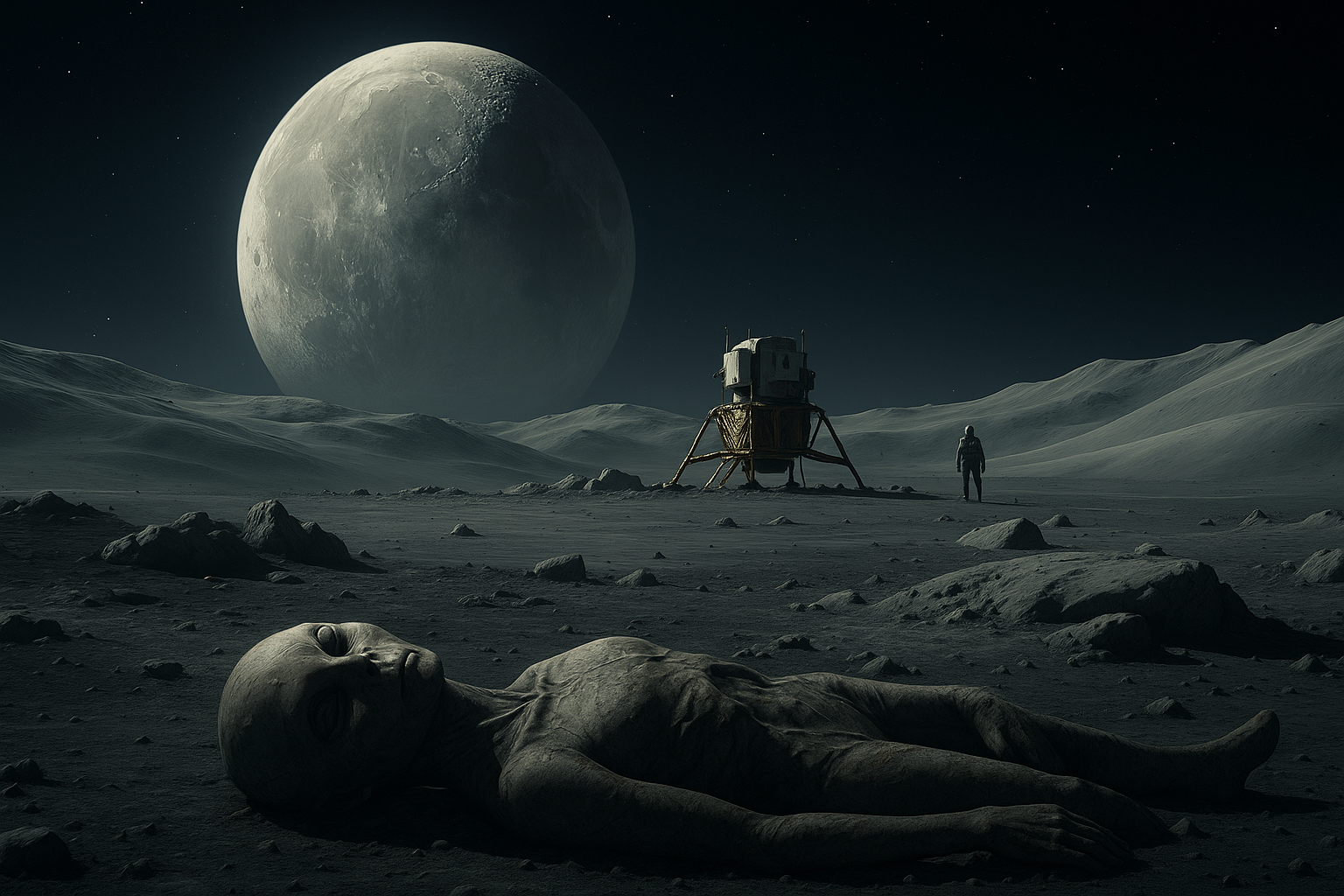
🔗 Also read: Apollo 20 & the Alien Woman on the Moon Mystery
The Internet’s Take: Parallel Worlds and Timeline Glitches
While scientists call it “memory distortion,” the internet has more colorful theories.
Many believe the Mandela Effect shows we’ve moved between parallel universes. There, timelines split, and small changes give us clues.
On Reddit and TikTok, many users say they remember logos, maps, or even events from a different reality.
It’s easy to understand why. The thought of crossing between dimensions is both scary and intriguing.
Movies like Everything Everywhere All at Once and Doctor Strange in the Multiverse of Madness only fueled this belief. They echo a truth we all sense deep down:
“What if there’s another version of the world… where things really did happen that way?”
“Reality is fragile. What we remember isn’t always what happened — but what our minds decided was true.”
Science vs Mystery — Who’s Right?
- Science says: Memory is fragile, social influence is powerful, and our brains often rewrite reality.
- Believers say: The world is shifting, timelines are merging, and the Mandela Effect is evidence of parallel worlds.
Who’s right? That’s the beauty of it — no one knows for sure.
Maybe the truth lies somewhere in between.
Maybe the Mandela Effect isn’t proof that reality changed…
…but that reality is more flexible than we think.
💭 “Maybe the Mandela Effect doesn’t prove that timelines collide — only that human memory is powerful enough to rewrite them.”
Final Thought: What Do You Remember?
“Perhaps the Mandela Effect shows that universes don’t collide. It highlights how human imagination can create its own worlds.”
Next time you’re sure about something, pause. Ask yourself:
Did it really happen that way, or did your mind just make it feel real?
Join the Conversation
Have you ever experienced a Mandela Effect moment?
Share your story in the comments or tag @MagazineTimesToday on LinkedIn. We might feature your memory in our next viral post!














[…] 🌀 Also Read: 10 Mind-Bending Mandela Effect Examples That’ll Make You Question Reality […]